
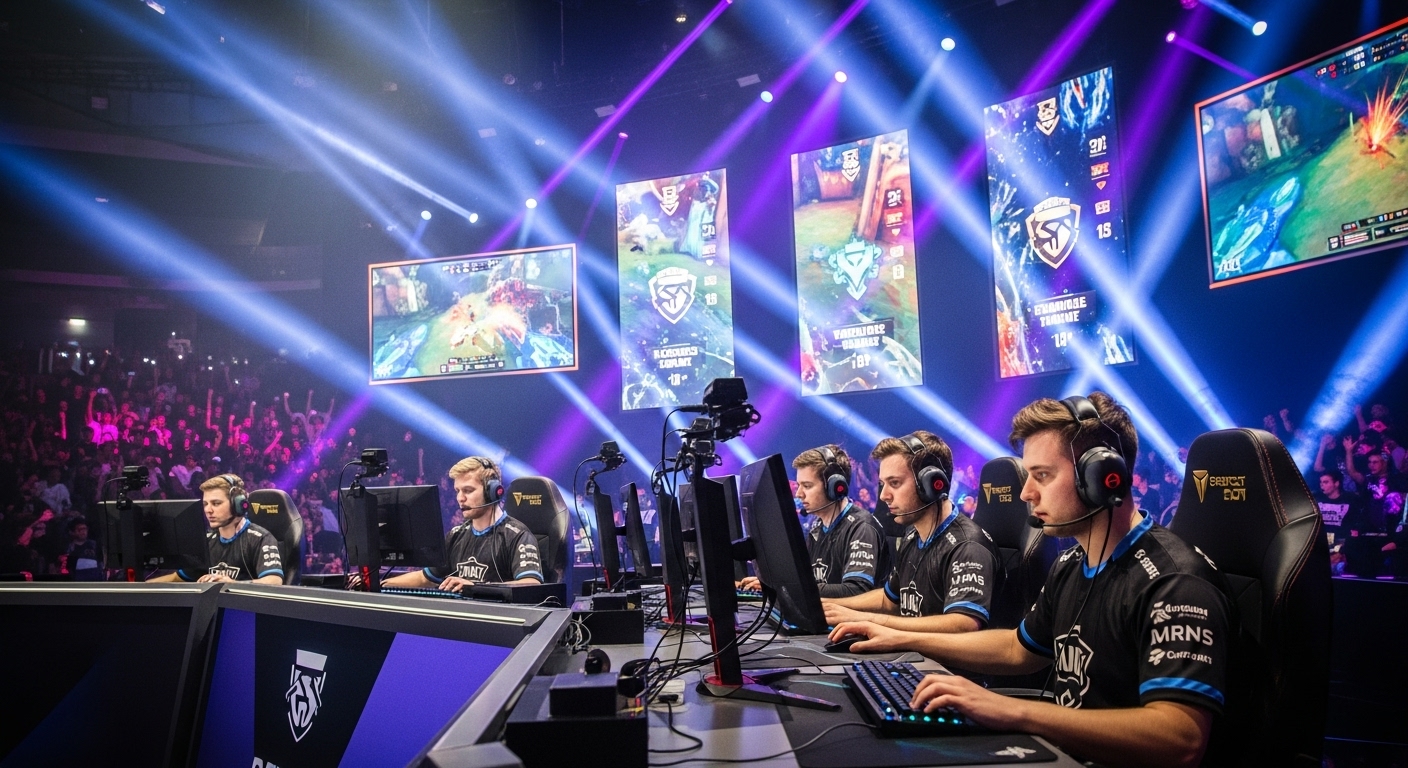
Esports, short for electronic sports, has transformed from a small underground movement of competitive gamers into a global entertainment powerhouse. What was once dismissed as just “kids playing video games” is now a billion-dollar industry with professional teams, global tournaments, sponsorships, and millions of dedicated fans watching every move of their favorite players. The rise of esports is one of the most fascinating cultural and technological developments of the past few decades, blending competition, media, community, and digital innovation into one thriving ecosystem.
The Birth of Competitive Gaming
The roots of esports go back further than most people realize. Competitive gaming existed long before the internet became part of everyday life. In the early 1980s, arcade tournaments drew crowds of players competing for high scores in games like Space Invaders and Pac-Man. These contests were modest, often held in local arcades or small venues, but they laid the foundation for something much bigger. The first widely recognized gaming competition was the 1980 Space Invaders Championship, organized by Atari, which attracted over ten thousand participants across the United States.
As home consoles grew in popularity through the 1980s and 1990s, gaming slowly became more personal and less communal. Yet the competitive spirit never faded. Titles like Street Fighter and Mortal Kombat created local rivalries in arcades, while games like StarCraft and Quake began shaping a more connected and organized form of competition, especially as local area networks (LANs) allowed players to face off directly.
The Rise of the Internet and the Birth of Online Competition
The arrival of the internet in the late 1990s and early 2000s revolutionized how people played games. Multiplayer gaming exploded as players could now connect globally, testing their skills against opponents from across the world. Online platforms transformed what had been a niche activity into a rapidly growing digital community.
South Korea was one of the first countries to truly embrace this new wave of online gaming. The rise of broadband connections and PC bangs — gaming cafés where players could compete side by side — helped titles like StarCraft become national obsessions. South Korean players became global icons, and televised matches began attracting massive audiences. For the first time, professional gamers were being treated like athletes, with training schedules, sponsorships, and fan followings.
This period marked the true beginning of modern esports. Games like Counter-Strike, Warcraft III, and Dota began to create organized competitive scenes that would later inspire the leagues and tournaments we know today. Esports was no longer just a pastime; it was becoming a legitimate form of entertainment.
The 2000s: Building the Infrastructure
By the mid-2000s, esports was starting to find its footing as an organized global industry. The development of dedicated leagues and tournaments such as the Cyberathlete Professional League (CPL), Major League Gaming (MLG), and World Cyber Games (WCG) provided professional structure and global recognition. These organizations laid down the rules, standards, and platforms necessary for professional gaming to thrive.
As broadband internet improved, streaming platforms emerged, allowing fans to watch matches live from anywhere. This was a turning point. Watching esports was no longer limited to small venues or local broadcasts. The ability to stream games online created a sense of global participation, where fans could follow their favorite teams and players just like they did with traditional sports.
Games like Halo, Counter-Strike 1.6, and StarCraft continued to define competitive gaming during this period, while others like Call of Duty and FIFA brought esports into mainstream consciousness by connecting with fans of traditional sports.
The Role of Streaming: Esports Meets the Masses
If the 2000s built the foundation, the 2010s set esports on fire. The single most important catalyst for its explosion was the rise of live streaming. Platforms like Twitch and YouTube Gaming gave fans direct access to professional matches, tournaments, and player streams. Suddenly, anyone could watch a League of Legends world final or a Dota 2 international from their phone or laptop, and millions did.
This accessibility transformed esports from a niche community into mainstream entertainment. Streaming not only democratized viewership but also opened new revenue streams through ads, subscriptions, and donations. Players became influencers, and teams became brands. A new kind of celebrity emerged: the professional gamer who could both compete at the highest level and entertain audiences online.
The cultural shift was significant. Esports players began signing with major organizations, living in team houses, and training with coaches, nutritionists, and analysts. Their matches filled entire stadiums, with production values rivaling traditional sports broadcasts.
The Games That Defined a Generation
Every major sport has its icons and defining moments. The same is true for esports. Certain games have shaped the competitive landscape more than others, setting standards for skill, teamwork, and entertainment value.
League of Legends, released in 2009, became one of the most successful esports titles in history. Its global reach, structured leagues, and annual World Championship turned it into a cultural event watched by millions. Dota 2, its spiritual sibling, created one of the largest prize pools in esports history with its annual tournament, The International, funded almost entirely by fan contributions.
Meanwhile, first-person shooters like Counter-Strike: Global Offensive and Call of Duty dominated the Western scene, offering fast-paced, team-oriented competition. Overwatch brought a new level of polish and accessibility, while games like Fortnite blurred the line between esports and mainstream pop culture, hosting tournaments featuring both professional players and celebrities.
Fighting games, too, retained their loyal community through events like EVO, celebrating the raw skill and intensity that defined the early days of competitive gaming. Each genre contributed something unique to the ecosystem, from strategy and teamwork to mechanical precision and creativity.
Esports as a Career and Industry
The professionalization of esports has been nothing short of remarkable. Players who once competed for modest cash prizes now sign million-dollar contracts. Major organizations like Team Liquid, Cloud9, Fnatic, and T1 operate like professional sports teams, complete with management staff, branding deals, and global fan bases.
Sponsorships and partnerships have become a key part of the business. Major companies outside of gaming — from energy drink brands to car manufacturers — now invest heavily in esports, recognizing its influence over a young, engaged audience. Universities offer scholarships for esports athletes, and governments in countries like South Korea, China, and the United States have begun to acknowledge esports professionals as legitimate athletes.
Job opportunities have expanded beyond players and coaches. The industry now employs event organizers, shoutcasters, analysts, content creators, and marketing professionals. It’s an ecosystem that thrives on both competition and creativity, blending sport, media, and technology in a way few industries can match.
The Community and Culture Behind Esports
Beyond the bright lights and large arenas lies the beating heart of esports: its community. Esports thrives because of the passion and dedication of fans, players, and content creators who share a deep connection through gaming. Online forums, social media platforms, and streaming chats have built a sense of belonging that transcends geography. Fans can debate strategies, share highlights, and celebrate victories together regardless of where they live.
Esports has also provided a sense of identity and opportunity for people who may not fit into traditional athletic molds. It offers a platform for talent and intelligence, emphasizing reflexes, strategy, and teamwork over physical attributes. This inclusivity has attracted a diverse audience and has made esports an integral part of youth culture around the world.
Cosplay, fan art, and community-driven events like conventions and charity tournaments have added depth to the culture, turning esports from simple competition into a lifestyle and creative movement.
Challenges Facing Esports
Despite its success, esports faces several challenges as it continues to grow. One of the biggest concerns is player burnout. Professional gamers often begin their careers young, dedicating long hours every day to practice, sometimes at the expense of their physical and mental health. As with traditional sports, discussions around work-life balance, mental health support, and sustainable career paths have become increasingly important.
Another issue lies in governance and regulation. Esports is still relatively new and fragmented, with different rules, organizations, and structures depending on the game and region. Unlike football or basketball, there’s no single global governing body. This creates challenges in standardizing player contracts, managing tournaments, and ensuring fair play across regions.
Cheating and match-fixing scandals have occasionally tarnished esports’ reputation, highlighting the need for stricter oversight and improved technology to maintain competitive integrity. Similarly, issues like online harassment, diversity, and representation remain ongoing conversations within the community.
The Economic and Technological Ripple Effect
Esports has had a major economic impact on the broader gaming and tech industries. The demand for better performance, smoother streaming, and interactive viewing experiences has pushed innovation in hardware and software alike. Companies are constantly improving graphics cards, monitors, and peripherals to meet the expectations of competitive players and enthusiastic fans.
Cities around the world are now investing in esports arenas and training facilities, seeing the potential for tourism and local development. Entire events and conventions generate revenue streams that rival traditional sports matches. Game publishers have also learned the value of cultivating long-term esports ecosystems for their titles, using tournaments and leagues as both marketing tools and community builders.
Technological advances like virtual reality and augmented reality are likely to shape the next generation of esports experiences, blurring the lines between player and spectator. Meanwhile, artificial intelligence and data analytics are being used to study gameplay patterns, enhance coaching, and even predict match outcomes.
Esports and Traditional Sports: Rivals or Partners?
At one point, many people viewed esports as the antithesis of traditional sports. The stereotype was simple: traditional sports required physical exertion and discipline, while gaming was passive entertainment. But over time, that perception has changed dramatically.
Today, the two industries often intersect. Major sports franchises own esports teams, athletes invest in gaming startups, and broadcasters like ESPN and BBC regularly air esports events. Both worlds recognize the value of competition, storytelling, and fan engagement. The mental preparation, teamwork, and strategy involved in esports mirror those of traditional sports, even if the arena looks different.
In fact, the collaboration between the two is growing. Traditional sports organizations see esports as a way to reach younger audiences, while esports benefits from the credibility and business expertise of established sports models. The relationship is becoming symbiotic rather than competitive.
The Future of Esports
The future of esports looks bright, but it’s still being written. With technological advancements, global reach, and growing cultural acceptance, esports is poised to become one of the defining industries of this century. Yet its future depends on how it handles its challenges — from ensuring player welfare and fair governance to maintaining authenticity and community spirit.
There’s a strong chance esports will become fully integrated into mainstream entertainment, perhaps even entering the Olympics in some form. It will continue to evolve as new genres and technologies emerge, giving rise to fresh experiences that blend competition, creativity, and connection.
What remains certain is that esports is not a passing trend. It’s a reflection of how human competition has adapted to the digital age — an evolution of our desire to test skill, connect with others, and celebrate excellence. Whether played in packed stadiums or watched from a bedroom screen, esports represents a shared experience that transcends borders and generations.
Conclusion: More Than Just Games
Esports is much more than playing video games competitively. It’s a culture, an economy, and a form of expression that reflects our modern world. It combines art and technology, strategy and reflex, community and individuality. It has grown from humble beginnings into a global stage that celebrates creativity, intelligence, and perseverance.
As gaming continues to evolve, esports will evolve with it — adapting, innovating, and inspiring new generations. From the arcade halls of the past to the packed arenas of today, one thing remains unchanged: the thrill of competition and the joy of mastery. That human drive, translated into a digital form, ensures that esports will remain one of the most dynamic and exciting industries for decades to come.