
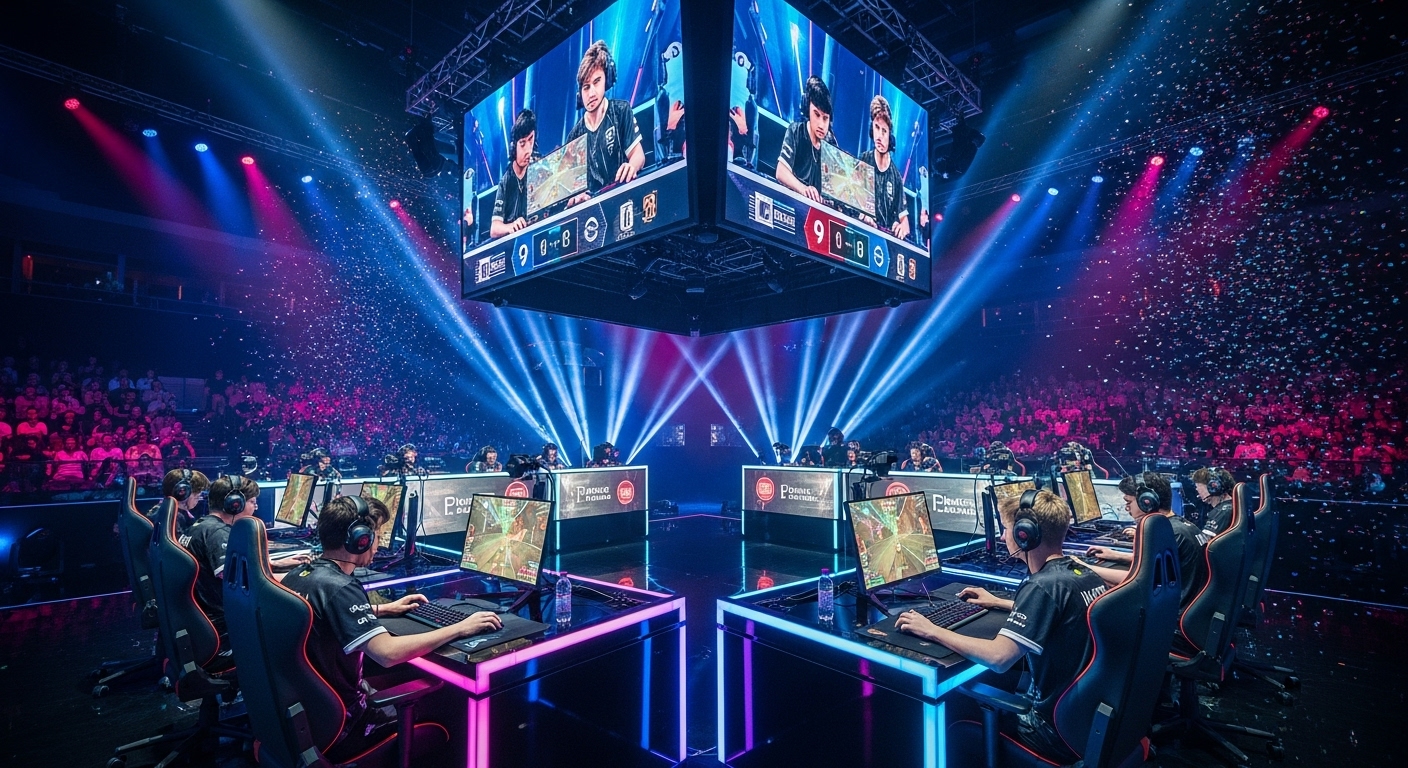
In the world of competitive gaming, the evolution of esports has been nothing short of remarkable. What began as casual competitions between friends has now transformed into a global entertainment powerhouse, captivating millions of fans worldwide. Esports, short for electronic sports, refers to organized multiplayer video game competitions, particularly between professional players, individually or as teams. The industry’s growth has been fueled by technological advancements, social media, and a massive increase in digital audiences, with esports now rivaling traditional sports in terms of viewership, sponsorships, and prize money. This blog post will explore the rise of esports, its cultural impact, the future of competitive gaming, and how it continues to redefine entertainment.
The Birth of Esports: Early Days of Competitive Gaming
Esports did not emerge overnight; it has a history that stretches back to the early days of video gaming itself. In the 1970s and 1980s, video games like Pong and Space Invaders were becoming increasingly popular. Although these games were relatively simple, they laid the groundwork for competitive gaming by establishing the idea of score-based competitions. The first major tournament recognized as an esports event occurred in 1980, when Atari hosted the Space Invaders Championship. Thousands of participants competed across the United States, and the event is often regarded as one of the earliest examples of video game competitions on a larger scale.
As video games evolved, so did the nature of these competitions. In the 1990s, games like Quake and StarCraft became staples in competitive gaming circles. The advent of online multiplayer gaming further fueled this growth, as players from around the world could now compete against each other in real-time. Early online games like Warcraft and Counter-Strike helped form the foundation of what would eventually become the modern esports industry. These games cultivated a competitive culture and fostered online communities where players could discuss strategies, build rivalries, and organize tournaments.
The Explosion of Esports: From Niche to Mainstream
While esports began as a niche hobby for hardcore gamers, its transformation into a mainstream entertainment phenomenon can largely be attributed to the rise of streaming platforms like Twitch and YouTube Gaming. In the mid-2000s, these platforms enabled players and fans to share live gameplay and view others’ streams from the comfort of their homes. Twitch, which launched in 2011, played a pivotal role in expanding esports’ reach. By offering a live streaming service tailored specifically for gaming, Twitch provided a space for players to broadcast their matches, showcase their skills, and interact with fans in real-time.
In addition to streaming platforms, the rise of social media helped promote esports to a broader audience. Platforms like Twitter, Facebook, and Reddit allowed players, teams, and fans to share content, discuss matches, and engage with the esports community. The combination of streaming platforms and social media networks created an interconnected ecosystem where the reach of competitive gaming extended far beyond traditional gamer circles.
Another crucial factor in the growth of esports was the advent of major esports tournaments, which began to gain significant attention from sponsors, investors, and media outlets. Tournaments like The International (Dota 2), League of Legends World Championship, and Counter-Strike: Global Offensive (CS:GO) events attracted millions of viewers, with prize pools reaching into the millions of dollars. These high-profile events not only elevated the prestige of esports but also attracted global sponsors, including well-known brands like Coca-Cola, Intel, and Mercedes-Benz, further legitimizing the industry.
The Esports Ecosystem: Players, Teams, and Leagues
Esports has grown into a multi-faceted ecosystem, consisting of professional players, teams, leagues, broadcasters, and sponsors. This ecosystem operates similarly to traditional sports, with players competing in various games under the banner of professional organizations or franchises.
Professional Players
At the heart of esports are the players. Professional esports athletes dedicate themselves to mastering their chosen games, often practicing for hours every day to refine their skills and maintain peak performance. These players are not only talented gamers but also public figures who attract large followings on social media platforms. Top esports players, such as Faker (Lee Sang-hyeok) from League of Legends or N0tail (Johan Sundstein) from Dota 2, have become global icons, with fan bases that rival those of traditional sports stars.
The path to becoming a professional esports player is highly competitive. Players often start young, honing their skills in online games or local tournaments before being scouted by professional teams. Once on a team, they undergo intense training, playing and strategizing alongside their teammates to improve their chances in major tournaments.
Teams and Organizations
Esports teams are often composed of five to six players, although the roster size can vary depending on the game. These teams are responsible for organizing training schedules, developing team strategies, and participating in leagues and tournaments. Some of the most prominent esports organizations include Cloud9, Team Liquid, Fnatic, and T1. These organizations manage everything from player contracts to sponsorships, ensuring that their teams remain competitive in the ever-evolving world of esports.
Teams often have coaches and analysts who help refine strategies, provide in-game guidance, and analyze opponents’ tactics. The presence of support staff is a testament to how serious esports has become. It’s no longer just about playing video games—it’s about creating a cohesive, well-oiled machine that can dominate at the highest level.
Leagues and Tournaments
Esports competitions have evolved into structured leagues and tournaments, similar to traditional sports leagues like the NBA or NFL. These events often feature regional qualifiers, round-robin formats, and playoffs, leading up to a grand championship event. The League of Legends World Championship and The International for Dota 2 are two of the biggest esports tournaments, both attracting millions of viewers and offering multi-million-dollar prize pools.
The establishment of professional esports leagues has helped stabilize the industry and provide a framework for sustained competition. The Overwatch League, for instance, operates like a traditional sports league, with teams based in cities around the world and regular season matches that culminate in a championship series. Other games, such as Counter-Strike: Global Offensive and Rainbow Six Siege, have similar league structures, with seasonal competitions that lead to major finals.
Esports Viewership: The Digital Arena
Esports’ rise can be attributed not only to its competitive nature but also to the growing viewership that follows these events. With streaming platforms like Twitch, YouTube Gaming, and Facebook Gaming, esports matches can be watched live by millions of fans worldwide. These platforms provide a real-time, interactive experience, where viewers can watch games, follow live commentary, and even participate in chat discussions.
The viewership numbers for major esports tournaments rival traditional sports events. For example, the League of Legends World Championship regularly attracts over 100 million viewers, with the 2019 finals drawing over 3.9 million concurrent viewers. In comparison, major sports like the NBA Finals and Super Bowl often see similar or slightly higher viewership figures. These numbers show that esports is no longer just a fringe interest but a dominant force in the entertainment industry.
Esports also provides a unique viewing experience. Unlike traditional sports, where matches are often played in real-time and require broadcast coverage, esports tournaments are broadcasted with live-streamed gameplay, often complemented by expert commentary, player interviews, and community interaction. Fans can interact directly with players and analysts during live streams, creating a sense of community and excitement that traditional sports broadcasts sometimes lack.
The Business of Esports: Sponsorships, Investment, and Merchandising
The economic potential of esports has been recognized by both traditional and digital brands, leading to an influx of investment, sponsorships, and partnerships. Companies in industries like technology, fashion, and consumer goods have flocked to esports, eager to tap into the massive, youthful audience that follows competitive gaming. The sponsorships and investments in esports are enormous, with major brands like Red Bull, Intel, and Mercedes-Benz sponsoring esports tournaments, teams, and individual players.
Additionally, the esports merchandise market has boomed. Fans are able to purchase jerseys, hats, and other team-branded gear, allowing them to showcase their support for their favorite teams and players. This merchandise industry, along with ticket sales for live events, has created a lucrative revenue stream for the esports sector.
As the industry matures, esports organizations are also diversifying their revenue models by creating content for platforms like YouTube and Twitch. Teams and players are earning significant income through their broadcasts, sponsorship deals, and personal merchandise. Some even branch into content creation outside of gaming, building personal brands that resonate with fans.
The Future of Esports: Growth, Integration, and Mainstream Acceptance
The future of esports looks incredibly promising. As technology continues to evolve, we can expect even more immersive experiences. Virtual reality (VR) and augmented reality (AR) could play a role in future esports events, offering fans a more interactive and visually engaging way to experience competitions. AI and machine learning could also help refine training regimens for players and provide real-time analytics during matches.
Esports is also on its way to being recognized as a mainstream sport. Universities and academic institutions are increasingly offering esports scholarships and establishing esports programs, providing a pathway for students to pursue competitive gaming at the collegiate level. In fact, esports has even made its way into the conversation about the Olympic Games, with some speculating that esports could be included as an official event in the near future.