
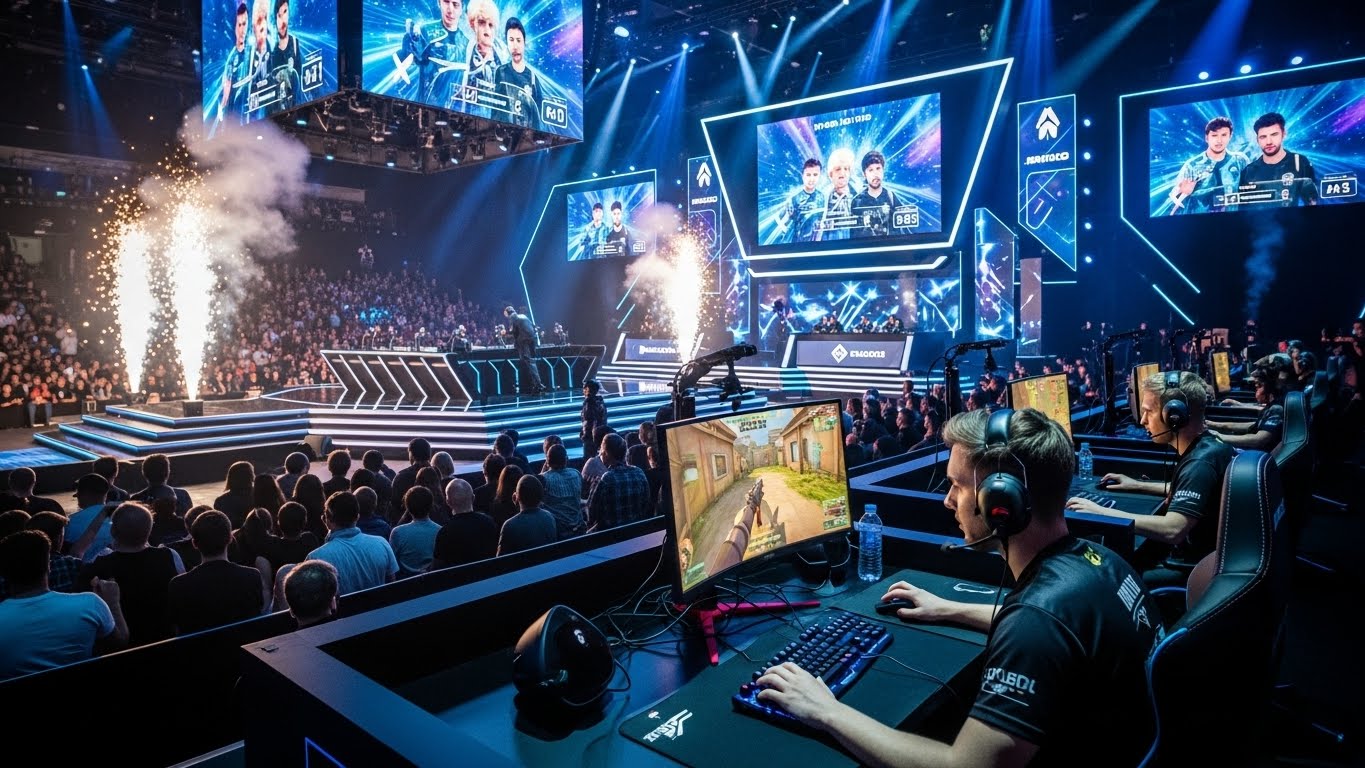
Esports, or competitive video gaming, has undergone a remarkable transformation over the past few decades. Once a niche hobby pursued by a small group of enthusiasts, esports has become a global entertainment industry, drawing millions of viewers, massive sponsorships, and professional athletes. This rapid rise has led many to consider esports as a legitimate sport in its own right. In this blog post, we will explore the evolution of esports, its impact on the gaming industry, the rise of professional players, and the future of competitive gaming.
The Early Days: A Community Built Around Passion
The roots of esports can be traced back to the early 1990s when gaming was primarily seen as a form of entertainment enjoyed by casual players. Back then, multiplayer games like Doom and Warcraft allowed players to engage in head-to-head combat over local area networks (LAN). The concept of organized competitive gaming, however, was still in its infancy.
One of the earliest examples of a competitive gaming event was the Red Annihilation tournament in 1997, which was held for the game Quake. The tournament, organized by the game’s developer id Software, attracted over 2,000 participants and was one of the first to offer a significant cash prize to its winners. While this event was groundbreaking at the time, esports as a mainstream phenomenon was still far from realization.
However, a core community of passionate gamers began to form, laying the groundwork for the massive growth that would come in the years ahead. Players began organizing smaller tournaments, often with modest cash prizes, but these events were crucial in bringing attention to the potential of esports.
The Growth of Esports: From Local Competitions to Global Tournaments
The early 2000s saw a significant expansion in the esports scene. Online gaming platforms, such as Battle.net by Blizzard Entertainment and Gamespy, enabled players to connect over the internet and compete against each other from anywhere in the world. Games like StarCraft, Counter-Strike, and Warcraft III became staples in the competitive gaming scene, with players forming teams, participating in tournaments, and building fanbases.
In the early days of esports, most tournaments were still small-scale, often held in local gaming cafes or convention halls. However, as the popularity of competitive gaming grew, organizers began hosting larger and more ambitious events. One of the turning points for esports came in 2002 with the launch of the World Cyber Games (WCG), which quickly became one of the most prestigious global competitions. The WCG attracted top players from around the world, offering substantial prize pools and worldwide recognition. Other major events such as DreamHack and ESL (Electronic Sports League) followed suit, further solidifying esports as a legitimate and growing industry.
At the same time, the introduction of streaming platforms like Twitch and YouTube Gaming provided a platform for gamers to showcase their skills and interact with a global audience. The ability to broadcast live gameplay to an international fanbase led to the creation of professional teams and full-fledged broadcasting infrastructures for esports events.
The Rise of Professional Esports: Teams, Salaries, and Sponsorships
As esports gained in popularity, the growth of professional organizations and sponsorships took center stage. In the mid-2010s, top esports teams started to emerge, often focusing on a single game or franchise. Organizations such as Team Liquid, Fnatic, Cloud9, and SK Gaming began signing top-tier players and offering them salaries to compete in tournaments on their behalf.
This marked a pivotal moment in esports, as it transformed from a hobby into a career path for many talented individuals. Players could now make a living from competing in tournaments, signing endorsement deals, and streaming on platforms like Twitch. The appeal of professional gaming was undeniable. For many, it offered a unique combination of fame, skill, and financial reward that traditional sports athletes experienced.
Along with the rise of professional players, the prize pools for major esports tournaments also saw massive growth. Tournaments like The International, which is the premier Dota 2 event, set records with prize pools surpassing $30 million. Other major competitions, such as the League of Legends World Championship, also offer multi-million dollar prize pools, with the winners becoming global superstars within the esports community.
This era of professionalization led to the rise of esports management companies, training facilities, and even scouting for young talent. Similar to traditional sports, esports players now had coaches, analysts, and psychologists to help them perform at their best.
Esports and Mainstream Acceptance: From Gaming to Sports Entertainment
While esports was initially seen as a niche activity by many, the past decade has seen its acceptance grow among mainstream audiences. Major broadcasters and sports networks like ESPN and Fox Sports began broadcasting esports tournaments, further legitimizing competitive gaming as a viable form of entertainment. The 2018 League of Legends World Championship attracted over 100 million viewers globally, a figure that rivals the viewership numbers of traditional sports finals like the NBA Finals or the Super Bowl.
Esports also started to gain recognition from traditional sports organizations and institutions. In 2018, the International Olympic Committee (IOC) acknowledged the growing importance of esports, considering its potential inclusion in the Olympic Games. This sparked a wave of discussions about whether esports should be classified as an official sport, given its similarities to traditional sports in terms of competition, teamwork, and skill development.
Moreover, the rise of esports has created new career opportunities for people outside of just playing games. Commentators, analysts, event organizers, and even content creators have found a place within the esports ecosystem. The expansion of this “esports economy” has led to an entire industry built around the competitive gaming scene, contributing to its growth and sustainability.
The Role of Sponsors and Investors in Shaping Esports
One of the driving forces behind the growth of esports has been the influx of sponsorship and investment. Brands ranging from major tech companies like Intel, Nvidia, and Alienware to global names in sports such as Nike and Adidas have invested heavily in esports. These companies view esports as a way to reach a young, tech-savvy audience that is often difficult to engage through traditional advertising channels.
The partnership between esports and major brands is mutually beneficial. Sponsors provide the financial backing that allows esports tournaments to offer large prize pools, develop better broadcasting platforms, and improve the infrastructure of competitive gaming. In return, they gain access to a highly engaged and loyal fanbase that watches esports content religiously.
Investment in esports has also come from venture capitalists and private equity firms who see the potential for long-term growth. As esports continues to grow, investors are looking at the possibility of esports becoming a permanent part of the global sports entertainment landscape.
The Future of Esports: What’s Next?
As we look toward the future of esports, there are several trends that indicate it will continue to grow and evolve. One of the key trends is the increasing integration of virtual reality (VR) and augmented reality (AR) into the esports experience. With advancements in VR technology, players could compete in a more immersive, 360-degree environment. This could add a new dimension to competitive gaming and push the boundaries of what is possible in terms of gameplay and viewer experience.
Another trend to watch is the continued convergence of esports and traditional sports. Esports organizations are increasingly forging partnerships with traditional sports teams, and there are even dedicated esports arenas being built in major cities. These venues are designed to host large-scale tournaments and attract thousands of spectators, similar to how traditional sports stadiums are used.
Esports will also continue to expand into new regions. While the majority of competitive gaming’s viewership is concentrated in North America, Europe, and Asia, there is an increasing interest in Latin America, the Middle East, and Africa. As access to high-speed internet and gaming infrastructure improves in these regions, esports could become a more globally inclusive activity.
Conclusion: Esports as a Cultural Phenomenon
Esports has undoubtedly come a long way since its humble beginnings. From small LAN parties to global tournaments with millions of viewers, the industry has evolved into a cultural phenomenon. It has given rise to professional athletes, lucrative sponsorships, and an entire ecosystem built around competitive gaming. As the esports industry continues to grow, its impact on entertainment, culture, and even education will only increase. The future of esports looks bright, and its influence is likely to be felt in the world of sports, technology, and entertainment for many years to come.