
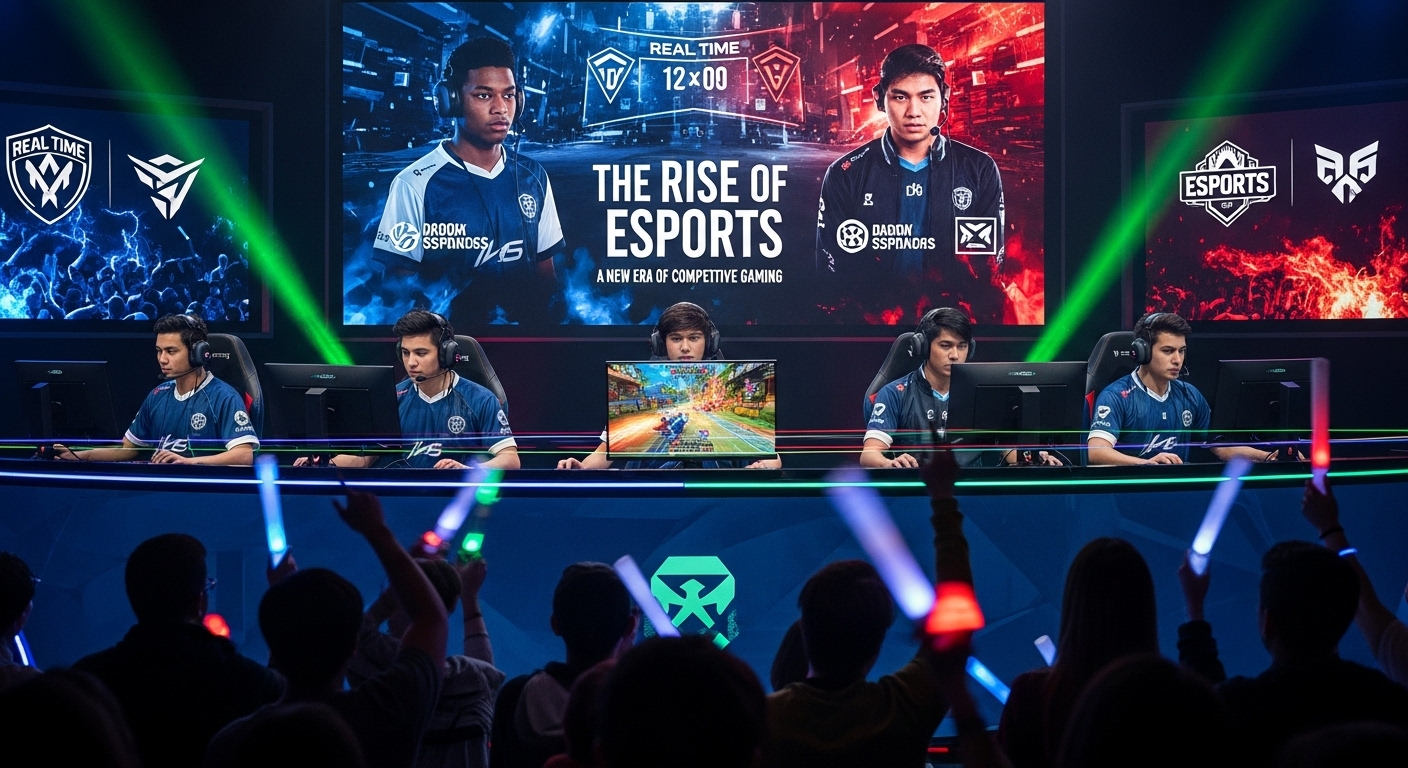
Introduction: From Arcades to Arenas
In the last few decades, the world has witnessed a radical transformation in the way people play, compete, and entertain themselves. What once began as small gatherings of gamers in dimly lit arcades has evolved into massive stadiums filled with cheering fans, flashing lights, and million-dollar prize pools. This transformation is the story of Esports, or electronic sports, a phenomenon that has taken the global entertainment industry by storm.
Esports represents the intersection of technology, entertainment, and competition. It’s not just about playing video games — it’s about mastering them, competing at the highest level, and pushing human reflexes and strategic thinking to their limits. Today, Esports has become a legitimate global industry, rivaling traditional sports in viewership, sponsorship, and cultural impact.
The Birth of Competitive Gaming
The roots of Esports can be traced back to the early 1970s, long before streaming platforms and high-speed internet. The first recognized video game competition took place in 1972 at Stanford University, where students battled in the game Spacewar. The prize was modest — a subscription to Rolling Stone magazine — but it marked the beginning of organized gaming competitions.
Through the 1980s and 1990s, gaming tournaments grew slowly but steadily. The arcade era saw players competing for high scores on games like Pac-Man, Donkey Kong, and Street Fighter II. These competitions were mostly informal, but they revealed something powerful: people didn’t just enjoy playing games; they enjoyed watching others play them skillfully.
With the rise of the internet and personal computers in the 1990s, multiplayer gaming expanded dramatically. Titles like Doom, Quake, and StarCraft allowed players from around the world to connect and compete. In South Korea, internet cafés known as “PC bangs” became social hubs, laying the foundation for the organized professional gaming scene that would soon dominate the world.
The 2000s: The Foundation of Modern Esports
The early 2000s marked the true beginning of modern Esports. This period saw the rise of structured tournaments, professional teams, and dedicated organizations that treated gaming as a serious competition rather than a casual pastime.
One of the key catalysts for this transformation was StarCraft: Brood War. In South Korea, StarCraft became a national obsession. Televised matches, celebrity players, and corporate sponsorships turned gaming into a cultural phenomenon. Players like Lim “BoxeR” Yo-hwan became household names, inspiring a new generation of gamers to dream of professional careers.
At the same time, Western countries began to catch up. Organizations like Major League Gaming (MLG) in North America and the World Cyber Games (WCG) on a global scale helped standardize tournaments and legitimize Esports as a professional pursuit. The competitive titles diversified, with games like Counter-Strike, Warcraft III, and Halo gaining large followings.
The Explosion of Online Streaming
The next major leap for Esports came in the 2010s with the rise of online streaming. Platforms such as Twitch, YouTube Gaming, and Facebook Live transformed the gaming landscape by making competitive gaming accessible to millions of viewers around the world.
Before streaming, Esports audiences were limited to live event attendees or those who could access niche TV broadcasts. With streaming, anyone could tune in to watch professionals play in real-time, chat with other fans, and even support their favorite players through donations or subscriptions. This level of interactivity gave Esports a massive boost in popularity.
Games like League of Legends, Dota 2, and Counter-Strike: Global Offensive became the cornerstones of modern Esports. Developers began designing games specifically with competitive play in mind, incorporating ranked systems, spectator modes, and regular updates to keep the gameplay fresh and balanced.
The combination of developer support, fan engagement, and technological accessibility created a perfect storm for Esports to flourish.
The Rise of Esports Organizations and Teams
As the audience and prize pools grew, Esports evolved from a hobby into a full-fledged career path. Professional teams formed around popular games, complete with coaches, analysts, nutritionists, and even sports psychologists. Players trained for hours every day, refining strategies, practicing mechanics, and studying opponents.
Top-tier organizations such as Team Liquid, Cloud9, Fnatic, T1, and Evil Geniuses became well-known brands, representing professionalism and excellence in gaming. These teams operated much like traditional sports clubs, with sponsorship deals, merchandise sales, and fan engagement strategies.
The development of gaming houses and training facilities mirrored the evolution of sports academies. In these controlled environments, players could practice together, receive feedback, and live a lifestyle centered around peak performance. The term “gamer” was no longer associated with isolation — it now represented teamwork, discipline, and dedication.
Major Esports Titles That Defined the Industry
Several games have played a pivotal role in shaping Esports into what it is today. Each has contributed to the growth of different genres and audience demographics.
1. League of Legends
Developed by Riot Games, League of Legends (LoL) is one of the most influential Esports titles in history. Launched in 2009, it quickly became a global phenomenon due to its accessibility, depth, and competitive structure. The League of Legends World Championship attracts millions of viewers each year, with production values that rival the Olympics or the Super Bowl.
2. Dota 2
A spiritual successor to the Warcraft III mod Defense of the Ancients, Dota 2 became synonymous with massive prize pools. Its annual event, The International, regularly offers multi-million-dollar rewards, funded in part by the community through in-game purchases. Dota 2 is renowned for its complexity, requiring a deep understanding of strategy, coordination, and skill.
3. Counter-Strike: Global Offensive
Counter-Strike has been at the heart of Esports for over two decades. Its emphasis on teamwork, precision, and reflexes makes it a timeless favorite. CS:GO tournaments have built some of the most loyal fanbases in gaming, and the franchise’s legacy continues with the release of Counter-Strike 2.
4. Fortnite
Epic Games’ Fortnite brought Esports to a younger and broader audience. Its unique combination of shooting and building mechanics, along with its vibrant style, captured the attention of millions. The 2019 Fortnite World Cup made headlines when a 16-year-old player won a $3 million prize, proving that age was no barrier to success in Esports.
5. Valorant
Launched in 2020, Valorant blended elements of CS:GO with character-based abilities similar to Overwatch. It quickly gained traction due to Riot Games’ strong Esports infrastructure. Within a few years, Valorant became one of the most-watched competitive titles worldwide.
Esports and Traditional Sports: The Growing Convergence
While Esports and traditional sports may seem worlds apart, they share surprising similarities. Both demand teamwork, strategy, and exceptional skill. Both foster communities of fans, generate sponsorships, and create heroes.
In recent years, traditional sports organizations have recognized the potential of Esports and begun investing heavily. Football clubs like Paris Saint-Germain, Manchester City, and FC Barcelona have launched Esports divisions. NBA franchises such as the Golden State Warriors and Philadelphia 76ers have bought or founded their own gaming teams.
This crossover has not only brought credibility to Esports but also bridged generational gaps. Parents who once dismissed gaming as a distraction now see it as a legitimate form of competition and even a viable career path.
The Business of Esports
The Esports industry has grown into a multi-billion-dollar ecosystem that extends far beyond tournaments. Its revenue streams include sponsorships, advertising, media rights, ticket sales, in-game purchases, and merchandise.
Major companies like Intel, Red Bull, and Mercedes-Benz sponsor Esports teams and events, recognizing the marketing power of a young, engaged, and global audience. Brands that traditionally focused on sports and entertainment now allocate large portions of their budgets to Esports campaigns.
Media rights have also become a major source of revenue. Esports leagues negotiate deals with streaming platforms to broadcast exclusive matches, while traditional networks experiment with airing Esports events on television. This blend of digital and traditional media has created new opportunities for exposure and monetization.
The Esports Ecosystem: Beyond the Players
While professional players often receive the spotlight, the Esports industry thrives because of a vast ecosystem of roles and professions that support it.
- Casters and Analysts: These commentators provide play-by-play coverage, strategic breakdowns, and emotional engagement for fans. Their personalities often become as iconic as the players themselves.
- Coaches and Analysts: Behind every successful team are strategists who analyze data, refine tactics, and ensure players are mentally and physically prepared.
- Event Organizers: Companies such as ESL and DreamHack handle the logistics of tournaments, including production, stage design, and fan experiences.
- Content Creators: Streamers, YouTubers, and social media influencers amplify Esports culture through videos, tutorials, and entertainment.
- Developers and Publishers: Game creators continuously update their titles to maintain balance, ensure fair play, and introduce new features that keep audiences engaged.
This complex network has made Esports one of the most dynamic industries in the modern digital economy.
The Role of Education and Academia in Esports
In the last few years, Esports has found its way into schools and universities around the world. Educational institutions have begun to recognize the value of gaming as a tool for learning teamwork, strategic thinking, and communication.
Several universities now offer Esports scholarships, treating players similarly to athletes in traditional sports. Students can pursue degrees in game design, Esports management, broadcasting, or event production. These programs not only prepare students for professional gaming but also open career paths in the broader gaming industry.
Additionally, Esports clubs and school leagues encourage inclusivity, giving students who might not fit into traditional sports a chance to compete and excel in a team environment.
Challenges Facing the Esports Industry
Despite its success, Esports faces several challenges that must be addressed to ensure sustainable growth.
1. Player Health and Burnout
Professional players often train for long hours with little rest, leading to physical and mental strain. Issues like repetitive strain injury (RSI), sleep deprivation, and anxiety are common. Organizations are increasingly prioritizing player welfare, introducing mandatory breaks and health programs.
2. Regulation and Governance
Unlike traditional sports, Esports lacks a unified global governing body. Rules, player contracts, and disciplinary actions vary widely across organizations and regions. This inconsistency can lead to disputes and unethical practices.
3. Gender Representation
While women make up a large portion of the gaming audience, female representation at the professional level remains limited. Initiatives to promote inclusivity and diversity are gaining momentum, but the industry still has work to do in combating toxicity and bias.
4. Match-Fixing and Cheating
As with any competitive activity involving money, Esports has encountered issues with match-fixing, hacking, and performance-enhancing tools. Maintaining fair play through anti-cheat technologies and strict enforcement is critical for maintaining credibility.
5. Economic Sustainability
Not all Esports organizations or games can sustain profitability. Some leagues have folded due to financial instability, while others depend heavily on developer support. Balancing growth with financial responsibility remains a key concern.
Esports and Cultural Influence
Esports is not just about competition; it’s a cultural movement. It has reshaped entertainment, language, and identity among young people globally. Gamers now share memes, slang, and community values that transcend national boundaries.
Esports stars are the new celebrities, with millions of followers on social media and sponsorship deals with major brands. Their influence extends beyond gaming into music, fashion, and even philanthropy. Esports events often feature live performances, cosplay contests, and fan art exhibitions, creating an ecosystem of creativity and collaboration.
Furthermore, Esports has helped redefine the idea of what it means to be an athlete. It celebrates mental agility, strategic depth, and rapid reflexes — skills that are just as demanding as physical endurance in traditional sports.
The Future of Esports
As technology continues to evolve, the future of Esports looks even brighter. Several trends are shaping its next chapter:
- Virtual Reality (VR) and Augmented Reality (AR): These technologies promise immersive new forms of competitive gaming that blend physical and digital experiences.
- Mobile Esports: Titles like PUBG Mobile and Mobile Legends have expanded Esports to regions where console and PC gaming are less accessible.
- AI and Data Analytics: Teams are using advanced analytics to track player performance, identify weaknesses, and develop strategies — much like modern sports science.
- Esports in the Metaverse: Virtual worlds and digital arenas may soon host interactive tournaments where fans can attend as avatars.
- Mainstream Integration: Esports could soon become a regular feature in major sporting events and even Olympic exhibitions, further solidifying its legitimacy.
The boundaries between digital and physical competition will continue to blur, and Esports will likely play a central role in shaping the entertainment landscape of the future.
Conclusion: A Digital Revolution of Competition and Creativity
The rise of Esports is one of the most remarkable stories of the 21st century. It represents not just the evolution of gaming but the evolution of human connection through technology. From small university tournaments to global championships watched by millions, Esports has proven that passion, skill, and innovation can create an entirely new form of entertainment.
What makes Esports truly special is its accessibility. Anyone with a computer, console, or phone can compete, connect, and create. It’s a world where talent transcends borders and where communities thrive on shared enthusiasm rather than physical proximity.
As the next generation of players and fans emerges, Esports will continue to inspire creativity, competition, and collaboration. Whether you are a player, a spectator, or simply a lover of digital culture, one thing is clear — Esports is not the future of competition. It is the present.