
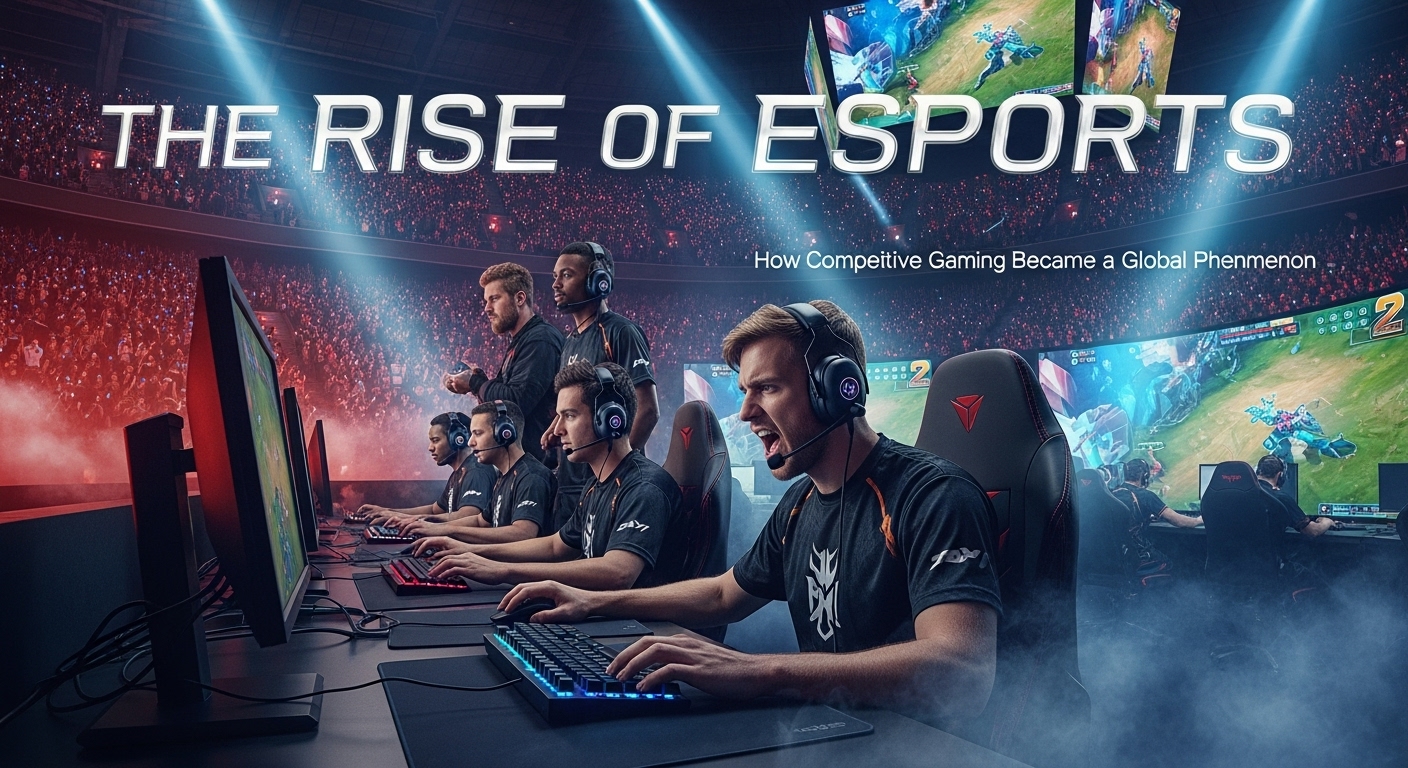
Introduction to the World of Esports
In the past few decades, video games have evolved from being mere sources of entertainment into a powerful cultural and economic force known as Esports. Short for electronic sports, Esports refers to organized competitive gaming, where individuals or teams face off in various video games before live audiences, both in-person and online. What once began in dimly lit arcades has now transformed into massive arenas filled with roaring fans, flashing lights, and million-dollar prize pools. The evolution of Esports reflects not only the advancement of gaming technology but also the changing nature of entertainment, sportsmanship, and digital community in the 21st century.
Esports today is not just a pastime—it’s a profession, a lifestyle, and for many, a dream career. Professional gamers have reached celebrity status, tournaments are broadcast on television networks, and brands are investing heavily in sponsorships. The rise of Esports marks one of the most significant transformations in modern entertainment, blending technology, strategy, teamwork, and business in a way that redefines what it means to be an athlete or performer.
The Early Days of Esports
The history of Esports stretches back farther than most people realize. The first recognized video game competition occurred in 1972 at Stanford University, where players competed in a game called Spacewar!. The prize was a year’s subscription to a magazine, but this small event marked the birth of competitive gaming. Throughout the 1980s and 1990s, video games grew more complex, and arcades became hotspots for informal competitions. Games like Pac-Man, Street Fighter, and Donkey Kong drew competitive players from around the world, eager to set high scores and prove their skills.
However, it wasn’t until the late 1990s and early 2000s that Esports began to take on its modern form. The rise of the internet allowed players to compete without being in the same room, and games like Counter-Strike, StarCraft, and Quake became early pioneers of online competition. LAN parties, where gamers connected their computers to a local network, became popular events for gamers to test their abilities against others in real-time.
The Rise of Online Competitions
The internet revolutionized gaming, turning it into a global phenomenon. With broadband connections becoming widespread, players could challenge opponents from across the world instantly. Platforms like Battle.net and Steam helped centralize competitive play, making it easier to organize tournaments and build communities around specific games. This period saw the creation of iconic tournaments such as the World Cyber Games and Electronic Sports World Cup, which began attracting international audiences and sponsorships.
As streaming platforms emerged, particularly in the late 2000s and early 2010s, Esports exploded in popularity. The ability to watch games live, complete with commentary and replays, transformed Esports into a spectator sport. Twitch, YouTube, and other streaming services allowed fans to follow their favorite teams and players in real time. This shift not only gave gamers a platform to showcase their skills but also opened up new avenues for fan engagement, sponsorship, and revenue generation.
The Global Expansion of Esports
By the 2010s, Esports had become a global industry. Countries across Asia, Europe, and North America began establishing their own leagues, teams, and gaming infrastructure. South Korea, in particular, played a crucial role in professionalizing Esports. The country’s dedication to gaming led to the creation of televised matches, professional gaming houses, and structured leagues long before the rest of the world caught up. Games like StarCraft became cultural phenomena, with players reaching rock-star levels of fame.
In China, massive investments in Esports facilities and tournaments helped the industry expand rapidly. Meanwhile, Western countries began recognizing Esports as a legitimate form of competition. Universities started offering scholarships for Esports athletes, and national federations were formed to regulate and promote the industry. Esports was no longer a niche interest—it was a global movement, attracting millions of viewers and billions of dollars in investment.
Popular Games That Shaped Esports
Esports thrives on the diversity of its games. Each title offers unique challenges and appeals to different audiences. Among the most iconic Esports titles are:
- League of Legends (LoL): A multiplayer online battle arena game that emphasizes teamwork, strategy, and skill. LoL tournaments attract massive global audiences, with world championships viewed by tens of millions of fans.
- Dota 2: Known for its complex gameplay and high skill ceiling, Dota 2 hosts The International, one of the largest Esports tournaments in the world, boasting record-breaking prize pools.
- Counter-Strike: Global Offensive (CS:GO): A tactical first-person shooter that rewards precision, coordination, and strategy. Its long-standing competitive scene is respected for its intensity and professionalism.
- Overwatch, Valorant, and Call of Duty: These titles combine fast-paced action with team-based play, appealing to both casual and hardcore audiences.
- Fortnite and PUBG: Battle royale games brought a new kind of spectacle to Esports, where survival, creativity, and adaptability became key elements of competition.
Each of these games has contributed to the growth of Esports, fostering massive fan communities and pushing developers to innovate constantly.
The Role of Technology in Esports Growth
Esports owes much of its success to advances in technology. High-speed internet, powerful gaming hardware, and sophisticated software have made competitive gaming accessible to millions. Live streaming platforms allow fans to engage in real-time, while social media helps teams and players build personal brands. Cloud gaming and mobile platforms have further expanded the audience, allowing people to compete from almost anywhere in the world.
Virtual reality (VR) and augmented reality (AR) are also beginning to influence Esports, promising immersive experiences that could redefine the spectator experience. Meanwhile, artificial intelligence (AI) is being used to analyze gameplay, helping players improve their strategies and performance.
The Business and Economics of Esports
Esports is no longer just about playing games—it’s big business. The industry generates billions of dollars annually through sponsorships, advertising, merchandise, ticket sales, and media rights. Major corporations see Esports as a prime marketing opportunity to reach younger audiences who spend more time watching online content than traditional television.
Esports organizations now operate much like traditional sports teams, with coaches, managers, and analysts working behind the scenes to support players. Some organizations even own training facilities where players live and practice full-time. Player contracts, brand deals, and prize winnings can reach staggering amounts, placing professional gamers among the top earners in the digital entertainment world.
Investors, celebrities, and sports franchises have also entered the Esports scene. Traditional sports teams from the NBA, football leagues, and even Formula 1 have invested in Esports teams, recognizing the long-term potential of the industry. This blending of traditional and digital sports is reshaping the landscape of global entertainment.
Esports as a Cultural Movement
Beyond business, Esports has become a cultural phenomenon. It brings together people from diverse backgrounds, united by their love for gaming. Esports events often feature live performances, cosplay, and fan interactions, creating a festival-like atmosphere. The culture surrounding Esports celebrates creativity, competition, and community.
The rise of Esports influencers and streamers has also given rise to a new kind of celebrity. Many professional players and content creators command massive online followings, influencing trends, fashion, and even language. Esports has become a form of identity and belonging for millions, bridging the gap between virtual and real-world socialization.
The Academic and Educational Impact
Educational institutions are recognizing Esports as more than just entertainment. Universities and colleges around the world now offer degree programs in game design, Esports management, and digital marketing related to gaming. Scholarships are awarded to top players, just like traditional athletes. These programs aim to nurture the next generation of professionals who will shape the future of the Esports industry, from event organizers to game developers and analysts.
Additionally, Esports teaches valuable skills such as teamwork, communication, and strategic thinking. Many educators argue that competitive gaming can foster discipline, creativity, and problem-solving abilities among students. The integration of Esports into education marks a significant step toward legitimizing gaming as a serious and respectable field.
Challenges Facing the Esports Industry
Despite its meteoric rise, Esports faces numerous challenges. One of the biggest issues is player burnout. The intense schedule and high-pressure environment can lead to mental and physical strain. Players often train for long hours daily, leaving little time for rest or personal life.
There are also concerns about fair play, cheating, and match-fixing. As with any competitive sport, maintaining integrity is crucial. Regulatory bodies are working to ensure transparency and fairness through strict rules and anti-cheating technologies.
Another challenge lies in ensuring diversity and inclusion within the Esports community. While the industry is growing, it still struggles with gender representation and accessibility for players from underprivileged backgrounds. Efforts are being made to create more inclusive environments and opportunities for everyone, regardless of gender or region.
The Future of Esports
The future of Esports looks bright and boundless. As technology continues to evolve, so will the ways in which we experience competitive gaming. The introduction of 5G networks, virtual reality, and advanced streaming technologies will make Esports even more immersive and accessible.
Esports is also on the path to becoming a part of mainstream sporting culture. Discussions about including Esports in international events, such as the Olympics, have already begun. This recognition would mark a monumental step for the industry, placing it alongside traditional sports in terms of prestige and global acknowledgment.
Furthermore, the next generation of gamers will grow up in a world where Esports is as natural as football or basketball. The continued integration of gaming into education, media, and entertainment ensures that the Esports industry will keep expanding. With more investment, better infrastructure, and global participation, Esports could become one of the defining industries of the digital age.
Conclusion
Esports is more than a trend—it’s a revolution that reflects the power of technology, creativity, and community. From humble beginnings in university basements and arcade halls to massive global tournaments with millions of viewers, Esports has redefined what competition means in the modern era. It has created new careers, united people across cultures, and given rise to a new form of entertainment that thrives in the digital landscape.
As the industry continues to evolve, Esports stands as a testament to human innovation and passion. It blurs the line between the virtual and the real, proving that skill, teamwork, and dedication know no boundaries. Whether one is a player, fan, or entrepreneur, Esports offers endless possibilities for connection and growth. The journey of Esports is far from over—in fact, it has only just begun, and its influence on the future of entertainment, technology, and culture will continue to expand for generations to come.