
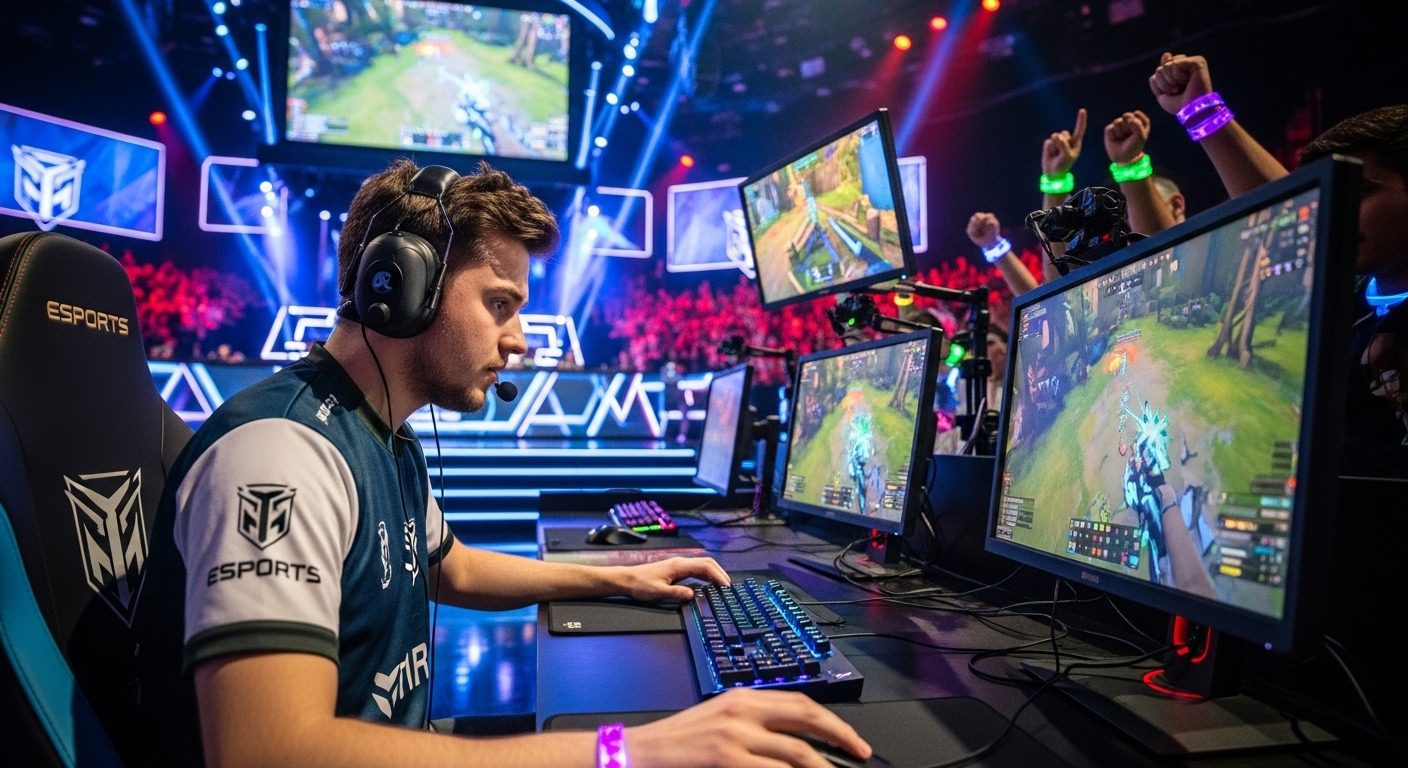
Esports, or electronic sports, has evolved from humble beginnings into a multi-billion-dollar industry that attracts millions of fans, players, and investors worldwide. What started as a niche activity for dedicated gamers has grown into a global phenomenon, with professional teams, massive tournaments, sponsorships, and millions of viewers tuning in to watch their favorite teams and players compete at the highest levels. This blog post will explore the rise of esports, its impact on gaming culture, its economic influence, and its future trajectory.
The Origins of Esports
Esports can be traced back to the early days of competitive gaming. While video games have existed since the 1950s, the concept of esports as we know it today didn’t emerge until the late 1990s. The first recognized esports tournaments began in the 1990s with games like Street Fighter, Doom, and Warcraft. These games were played in local LAN (Local Area Network) tournaments, where players gathered in the same physical space to compete against one another.
The first major milestone in the development of esports occurred in 1997 when Red Annihilation, a Quake tournament, attracted hundreds of players and offered a substantial cash prize for the winner. This event is often considered one of the first major international esports tournaments. But it wasn’t until the early 2000s that the internet and online multiplayer gaming truly opened up new doors for esports to grow and thrive.
The Growth of Esports in the Early 2000s
The internet revolutionized the way people played games, allowing players from around the world to compete against each other without needing to be in the same physical location. The launch of Battle.net by Blizzard Entertainment in 1996 was a key turning point, enabling players to connect to an online service for games like StarCraft and Warcraft III. This led to the establishment of several international esports competitions, notably the World Cyber Games (WCG) and the Electronic Sports World Cup (ESWC).
By the mid-2000s, the rise of real-time strategy (RTS) games like StarCraft and Warcraft III, as well as the popularity of first-person shooters (FPS) like Counter-Strike and Quake, cemented esports as a legitimate form of entertainment. The StarCraft scene in South Korea is especially notable for its early adoption of esports, with the country establishing a professional league and even airing matches on national television. In 2002, Ongamenet, a South Korean cable channel, began broadcasting StarCraft matches, marking one of the first times esports was treated as mainstream entertainment.
The Rise of Multiplayer Online Battle Arenas (MOBAs)
As the 2000s progressed, new game genres began to shape the future of esports. One of the most significant genres to emerge was the Multiplayer Online Battle Arena (MOBA), with games like League of Legends, Dota 2, and Heroes of the Storm leading the charge. These games, which combine strategic gameplay with team-based combat, quickly became a staple of esports, attracting massive audiences both online and in-person.
League of Legends (LoL), released by Riot Games in 2009, is often regarded as one of the most successful esports titles of all time. LoL’s professional scene grew rapidly, with tournaments like the League of Legends World Championship becoming some of the most-watched esports events in history. Its success was fueled by its accessibility, strategic depth, and the regular updates and new content that Riot Games provided, keeping the community engaged year after year.
Dota 2, developed by Valve, also played a pivotal role in shaping the esports landscape. The The International, Dota 2’s flagship tournament, is famous for offering one of the largest prize pools in esports history, often reaching over $30 million. The International’s success helped establish the importance of large-scale, high-stakes tournaments as a central part of esports.
The Business of Esports
One of the key factors behind the growth of esports in the 2010s was its increasing commercialization. What was once a niche hobby turned into a thriving business, with major investments flowing into the industry from multiple sectors. Traditional sports organizations began taking notice, with some investing in esports teams and leagues. The NBA, for example, launched the NBA 2K League in 2018, bringing esports to the forefront of mainstream sports culture.
In addition to traditional sports organizations, major tech companies like Intel, Coca-Cola, Red Bull, and Samsung started sponsoring esports events and players, further legitimizing esports as a multi-billion-dollar industry. Companies like Twitch, which was acquired by Amazon in 2014, played a key role in providing a platform for gamers to stream their gameplay and build communities around their favorite games. Streaming platforms like Twitch became critical for esports’ growth, as they allowed fans to engage with the esports scene directly, regardless of their physical location.
Esports sponsorship deals have grown significantly, with companies spending millions of dollars to sponsor tournaments, teams, and individual players. Esports has also seen the rise of digital and physical merchandise, with fans purchasing team jerseys, hats, and even in-game items related to their favorite esports organizations. Revenue from media rights, ticket sales, merchandising, and advertising has propelled esports into one of the most lucrative sectors of the entertainment industry.
The Global Impact of Esports
Esports has become a truly global phenomenon, with players, teams, and fans from all corners of the world participating in the competitive gaming scene. South Korea remains one of the most esports-obsessed countries, with its StarCraft and League of Legends scenes serving as the blueprint for other nations. In fact, esports has been so ingrained in South Korean culture that the government officially recognized professional gaming as a legitimate career path, providing funding and support for players and teams.
In North America, Europe, and China, esports has exploded in popularity over the last decade. Major esports leagues like the Overwatch League, League of Legends Championship Series (LCS), and Call of Duty League have attracted large followings, and international tournaments like the Intel Extreme Masters and ESL One regularly take place in major cities across the world. China, in particular, has seen a meteoric rise in esports, with the country boasting some of the largest audiences for tournaments like League of Legends and Dota 2.
The rise of esports has also led to the establishment of esports academies and universities offering scholarships and degrees in esports management. Institutions like Columbia College and Full Sail University in the U.S. now offer specialized programs that teach students the skills needed to succeed in the esports industry, further legitimizing esports as a viable career path.
The Future of Esports
As esports continues to evolve, the industry shows no signs of slowing down. The global esports audience is expected to reach over 500 million by 2025, driven by the increasing accessibility of gaming and the growth of mobile esports. With the proliferation of mobile games and platforms like PUBG Mobile, Clash Royale, and Free Fire, esports is no longer confined to PCs and consoles.
One of the biggest areas of growth in the coming years is virtual reality (VR) and augmented reality (AR) gaming. As VR and AR technologies continue to develop, esports may evolve into a more immersive experience. Players could compete in virtual arenas, and fans could watch matches from any angle they choose, as if they were physically present in the arena.
Additionally, as traditional sports continue to embrace digital platforms, we may see more integration between esports and mainstream sports. Many esports players are already professional athletes in their own right, and the line between traditional and digital sports may become increasingly blurred. Esports leagues and tournaments will likely continue to grow in scope and scale, attracting new players, teams, sponsors, and fans.
Conclusion: Esports as the Future of Entertainment
Esports has come a long way from its humble beginnings, and its future looks incredibly promising. With a rapidly growing global audience, lucrative sponsorships, and ever-increasing mainstream acceptance, esports has established itself as a key player in the world of entertainment. Whether you’re a casual gamer, a professional player, or a fan tuning in to watch the latest tournament, esports offers something for everyone.
The next few years will likely see even greater advancements in the world of competitive gaming, with new technologies, innovations, and cultural shifts shaping the landscape of esports. What was once seen as a niche interest has now become a global industry that is here to stay.