
Introduction
Esports, or competitive video gaming, has evolved from a niche hobby into a global phenomenon that captivates millions of players and fans worldwide. Once dismissed as a pastime for gamers, esports now represents a multi-billion-dollar industry, offering professional careers, live events, and international tournaments. Its growth is not only reshaping entertainment but also redefining what competition means in the digital age. In this blog, we explore the rise of esports, its cultural and economic impact, the benefits and challenges it presents, and what the future may hold for this rapidly expanding world.
The Evolution of Esports
The origins of competitive gaming date back to the early 1970s, with events such as the first video game tournaments for games like Pong. Over the decades, gaming technology improved, leading to the rise of multiplayer games and online connectivity. Titles like StarCraft in South Korea, Counter-Strike, and League of Legends established competitive gaming communities and professional leagues. The introduction of streaming platforms and esports organizations further transformed gaming into a spectator sport. Today, esports includes diverse genres, including real-time strategy, first-person shooters, battle royale, and sports simulation games, reflecting the broad appeal and inclusivity of this industry.
Global Popularity and Audience Engagement
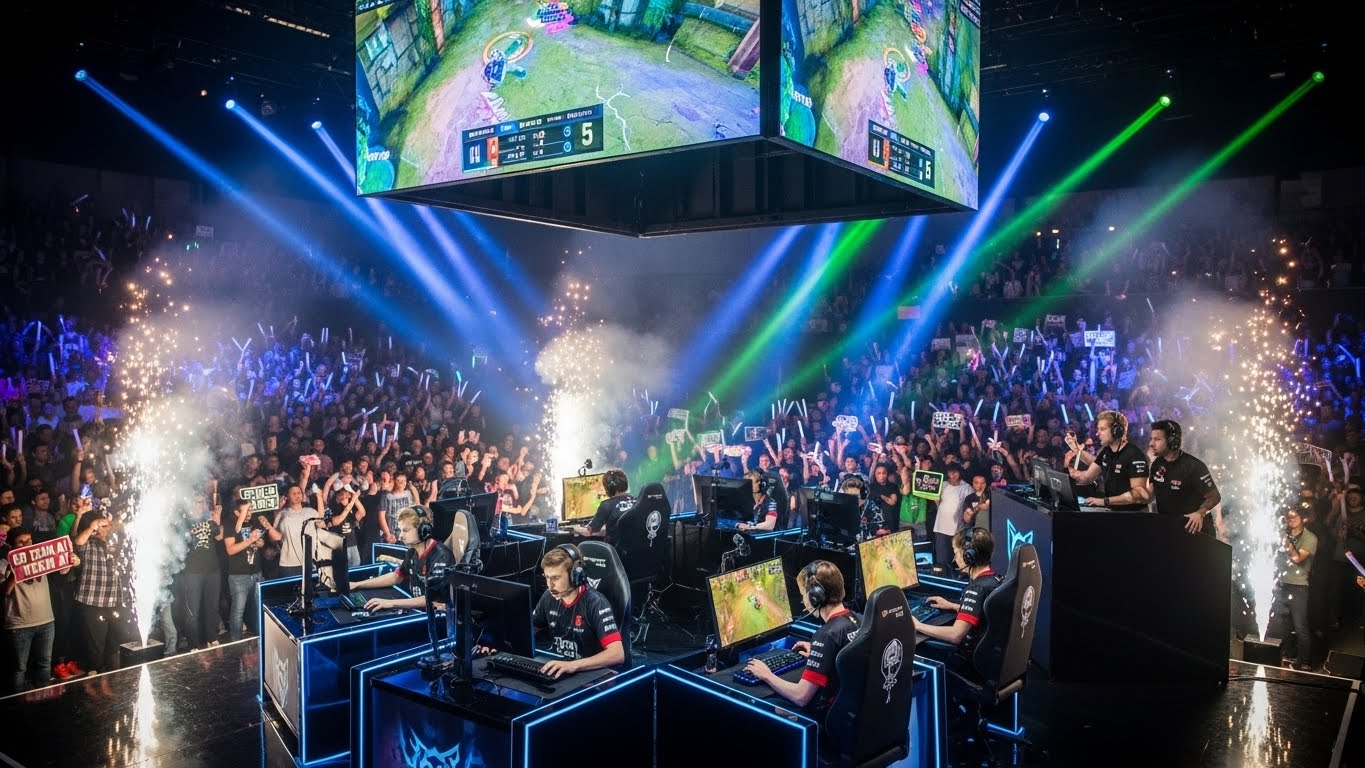
Esports has attracted an enormous global audience. Millions of fans tune in to watch live tournaments, online streams, and highlight reels. Unlike traditional sports, esports allows viewers to engage with players directly through chat platforms, social media, and interactive events. This level of engagement fosters a sense of community and connection among fans, who often participate in forums, fan art, and discussions about game strategies. International tournaments, such as The International for Dota 2 or the League of Legends World Championship, draw viewership numbers comparable to major sporting events, proving that competitive gaming is a cultural force with global influence.
Professionalization of Esports
The professionalization of esports has transformed it into a viable career path for talented gamers. Professional esports players undergo rigorous training schedules similar to traditional athletes, often dedicating 8 to 12 hours per day to practice, strategy development, and physical fitness. Teams and organizations provide coaching, nutrition guidance, and psychological support to maximize performance. Successful players earn income through salaries, tournament winnings, sponsorship deals, and streaming revenue. Additionally, esports careers extend beyond playing professionally, offering opportunities in management, content creation, broadcasting, game development, and event organization. This professional ecosystem has legitimized esports as a serious pursuit, attracting talent and investment worldwide.
Economic Impact and Sponsorships
The esports industry has witnessed unprecedented economic growth. Revenue streams include tournament prize pools, sponsorships, merchandise, streaming services, and advertising. Major brands invest heavily in esports to reach younger audiences who are more digitally engaged than traditional media consumers. Sponsorships range from gaming hardware and energy drinks to mainstream companies recognizing the marketing potential of esports events. Prize pools for top-tier tournaments can reach millions of dollars, making competitive gaming financially rewarding for elite players and their organizations. The economic impact extends to job creation, technological innovation, and the development of infrastructure for live events and digital platforms.
Technological Innovations Driving Esports
Technology plays a central role in the growth of esports. High-speed internet, advanced gaming hardware, and streaming platforms have made competitive gaming more accessible and engaging. Real-time analytics, artificial intelligence, and in-game tracking allow players and coaches to study performance and optimize strategies. Virtual reality and augmented reality are beginning to shape immersive gaming experiences, offering new dimensions for both players and spectators. The convergence of technology and gaming not only enhances competitiveness but also creates novel forms of entertainment, allowing esports to evolve continuously with the digital landscape.
Physical and Mental Demands of Esports
While esports may appear sedentary, it places significant physical and mental demands on players. Hand-eye coordination, reaction time, and precision are critical for success. Maintaining peak performance requires attention to posture, eye care, and physical fitness to prevent injuries such as repetitive strain syndrome or back problems. Mentally, esports players face intense pressure to perform, long hours of concentration, and the stress of high-stakes competitions. Mental resilience, focus, and stress management are essential skills for professional players, highlighting that esports demands discipline and dedication similar to traditional sports.
Cultural Influence and Social Connection
Esports has become a cultural phenomenon, shaping identities, communities, and entertainment. It offers a platform for people to connect over shared interests, breaking down barriers of geography, age, and background. Cosplay, fan art, and content creation are integral to esports culture, enabling fans to engage creatively. Additionally, esports promotes diversity and inclusivity by offering competitive opportunities to players regardless of gender, physical ability, or location. This cultural influence extends beyond gaming, impacting fashion, music, and social trends, and demonstrating that esports is a significant force in modern youth culture.
Challenges Facing the Esports Industry
Despite its growth, esports faces several challenges. Player burnout and mental health concerns are prevalent due to long hours of practice and intense competition. The lack of standardized regulations and inconsistent league structures can create instability and uncertainty. Moreover, issues such as cheating, match-fixing, and toxicity in gaming communities pose risks to integrity and reputation. Gender inequality remains a concern, as women are underrepresented in professional esports. Addressing these challenges requires collaboration between organizations, developers, and communities to promote fair play, ethical standards, and healthy participation.
Esports and Education
Esports is increasingly being integrated into educational programs, from high school clubs to collegiate scholarships. Universities offer esports teams, courses in game design and management, and scholarships for talented players. This integration recognizes the skills developed through esports, including teamwork, strategic thinking, communication, and problem-solving. Educational initiatives also emphasize balancing academics with competitive gaming, promoting healthy habits and long-term personal development. By connecting esports with education, the industry is not only nurturing talent but also legitimizing gaming as a valuable learning tool.
The Future of Esports
The future of esports looks promising, with continuous growth in audience engagement, technological innovation, and professional opportunities. Emerging technologies like virtual reality, artificial intelligence, and cloud gaming will enhance gameplay and spectator experiences. Globalization will expand esports into new regions, bringing diverse talent and audiences into the fold. Furthermore, the integration of esports into mainstream media, entertainment, and education will further legitimize it as a recognized form of competition and cultural expression. As esports evolves, it is likely to influence broader societal trends, from digital lifestyles to new models of entertainment and career development.
Conclusion
Esports represents a remarkable shift in how competition, entertainment, and culture intersect in the digital era. From its humble beginnings as a niche hobby to a professional, global industry, esports demonstrates the power of technology, community, and human creativity. It offers opportunities for personal and professional growth, fosters social connections, and inspires innovation. While challenges exist, the potential of esports to redefine sportsmanship, cultural engagement, and career paths is undeniable. As millions continue to play, watch, and participate, esports is proving that the world of competition extends far beyond traditional fields and arenas, reshaping the way we think about games, performance, and achievement.